Carlos Coolidge
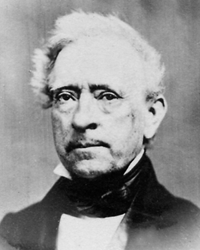
Carlos Coolidge
U.S.A.
Social Media

Personal Background
Carlos Coolidge graduated from Middlebury College and was admitted to the bar in 1814, beginning his legal career in Windsor. He served in various capacities within the Vermont Militia, rising to the rank of colonel. Coolidge held multiple positions in the Vermont House of Representatives and served as its Speaker. He also held the office of Governor of Vermont for two terms and was involved in state-level judicial reforms. His professional background includes significant leadership roles in both the legislative and executive branches of state government.
Political Ideas
Carlos Coolidge's political identity is marked by a blend of anti-slavery advocacy and a surprising alignment with colonization efforts. His economic stance, opposing territorial conquest, contrasts with his support for relocating freed slaves to Africa, showcasing a complex approach to racial equality. Coolidge's military experience and judicial reforms during his governorship reveal a calculated effort to balance regional interests with progressive governance. His rhetorical style likely weaves these diverse elements into a cohesive narrative, prompting deeper inquiry into his strategic philosophy.