Christopher Gore
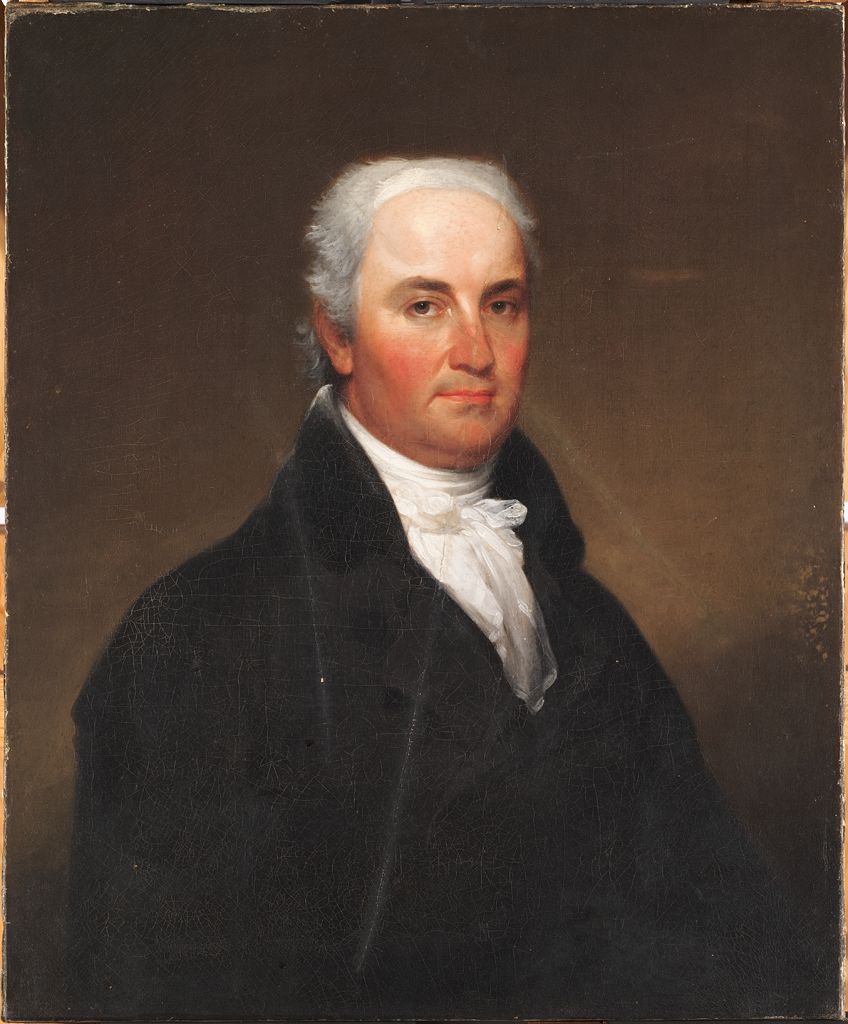
Christopher Gore
U.S.A.

Social Media

Personal Background
Christopher Gore attended Harvard College, graduating in 1776, and subsequently studied law, gaining admission to the bar in 1778. He practiced law, representing Loyalists and British merchants, and became prominent in Boston society. Gore held various political offices, including serving in the Massachusetts House of Representatives and the State Senate, where he led Federalist efforts. He also served as the first U.S. Attorney for Massachusetts and was appointed as a commissioner under the Jay Treaty. Gore was elected Governor of Massachusetts in 1809, during which he addressed a banking crisis and engaged in diplomatic efforts to renew relations with the UK. He later served as a U.S. Senator, opposing the War of 1812 and expressing approval of the Hartford Convention.
Political Ideas
Christopher Gore's political career reveals an intriguing blend of financial opportunism and staunch federalism. His advocacy for financial speculations and investments in infrastructure juxtaposes with his strong Federalist principles, showcasing a calculated approach to leveraging economic opportunities for political gain. Gore's foreign policy stance, marked by a focus on U.S. neutrality and anti-French sentiment, further highlights his strategic maneuvering between national interests and regional influence. His opposition to the War of 1812 and approval of the Hartford Convention reveal a complex ideological positioning that balances traditional Federalist values with pragmatic considerations.