David Jerome
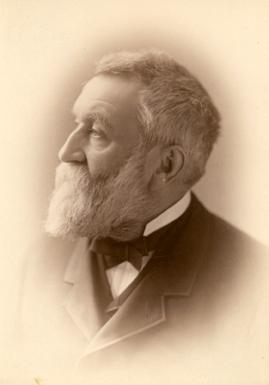
David Jerome
U.S.A.

Social Media

Personal Background
David Jerome's early life in Michigan was marked by significant relocations and a commitment to education, culminating in his service as an alderman in Saginaw. His professional career included nearly a decade managing state military affairs, including serving as President of the State Military Board and a colonel in the Union Army. Jerome's leadership extended to his tenure in the Michigan Senate, where he chaired the Committee on State Affairs and later served as military aide to Governor Henry Crapo. His governorship saw notable achievements, such as founding the Traverse City State Hospital for the Insane and advancing the state's railroad system. Jerome's later contributions included serving on the U.S. Board of Indian Commissioners and the Cherokee Commission.
Political Ideas
David Jerome's political career reveals a strategic blend of regional advocacy and progressive social policies. His commitment to Michigan's infrastructure, particularly railroads and education, underscores a localized approach to economic development. Jerome's establishment of the Michigan School for the Blind and the Traverse City State Hospital for the Insane highlights an unusual focus on social services and mental health during his tenure. His military background and leadership roles in state defense suggest a calculated prioritization of regional security and stability. Jerome's involvement in Indigenous affairs, including the controversial Cherokee Commission, presents an intriguing tension between his progressive social policies and his role in land acquisition from Native American tribes.