David Johnson
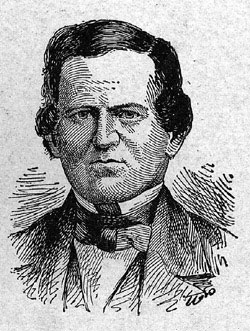
David Johnson
U.S.A.

Social Media

Personal Background
David Johnson began his career in law, serving as a solicitor in the Union District before being appointed a circuit judge. He advanced to higher judicial roles, including judge of the Court of Appeals and chancellor, demonstrating a progressive trajectory in the legal field. His tenure as Governor of South Carolina during the Mexican–American War underscored his commitment to the Union, as he supported federal causes while navigating the state through a period of increasing sectional tensions. Johnson's judicial career was marked by his principled stance on upholding U.S. law, even when it conflicted with state interests. His later years were spent in Upstate South Carolina, where he passed away and was buried.
Political Ideas
David Johnson's political identity is marked by a steadfast Unionist ideology, as evidenced by his judicial decisions that prioritized federal law over state mandates. His governorship during the Mexican-American War and the Wilmot Proviso debate highlights a calculated approach to navigating regional tensions, balancing support for U.S. causes with an awareness of the secessionist undercurrents in South Carolina. Johnson's unexpected alignment with federal priorities, despite his Southern roots, suggests a nuanced and strategically localized stance on national issues.