Elisha M. Pease
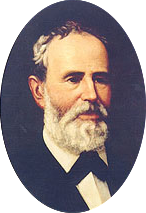
Elisha M. Pease
U.S.A.

Social Media

Personal Background
Elisha M. Pease was born in Massachusetts in 1812 and later moved to Mexican Texas, where he studied law and became involved in the Texas independence movement. He served as secretary of the provisional government and assistant secretary at the Convention of 1836, followed by a role as comptroller of public accounts in the Republic of Texas. Pease held various legislative positions, including terms in the Texas House of Representatives and the Texas Senate, before serving as governor from 1853 to 1857. During his governorship, he paid off the state debt, laying the groundwork for educational institutions. He sided with the Union during the Civil War and was appointed as the civilian governor of Texas during Reconstruction, though his policies led to his resignation. Pease made significant personal contributions, including donating his homestead to the City of Austin, which became Pease Park.
Political Ideas
Elisha M. Pease's political career is marked by a complex blend of fiscal conservatism and ideologically ambiguous Reconstruction policies. His decision to pay off the state debt while governor highlights a commitment to fiscal responsibility, yet his Reconstruction policies alienated both ex-Unionists and ex-Confederates, suggesting a calculated but contentious approach to regional unity. Pease's personal history with slavery adds another layer of intrigue, making his stances on civil rights particularly compelling.