Frederick B. Fancher
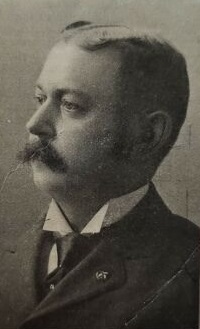
Frederick B. Fancher
U.S.A.

Social Media

Personal Background
Frederick B. Fancher began his career in insurance, gaining experience in Illinois and North Dakota before relocating to North Dakota in 1881. He established a significant farming operation and held leadership roles in state institutions, including the North Dakota Constitutional Convention and the State Hospital for the Insane. Fancher served as State Insurance Commissioner and later as Governor of North Dakota, where he implemented notable reforms such as establishing a state board of pardons and a twine plant in the state penitentiary. After his governorship, he transitioned to the private sector, managing a retail and wholesale grocery business in California until his retirement in 1925.
Political Ideas
Frederick B. Fancher’s political career reveals an intriguing blend of economic pragmatism and progressive criminal justice reforms. His establishment of a state board of pardons and a twine plant in the state penitentiary indicates a calculated approach to balancing rehabilitation with economic utility. Fancher’s background in insurance regulation and business operations adds a layer of ideological agility, as he navigates between private enterprise and public welfare. This juxtaposition invites further exploration into how Fancher reconciles these seemingly disparate policy stances.