George Glick
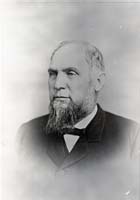
George Washington Glick
U.S.A.

Social Media

Personal Background
George Glick was born in 1827 in Greencastle, Ohio, and embarked on a legal career after studying law and being admitted to the bar in 1851. He relocated to Kansas, where he established a law practice and later became the first Democrat to serve as governor. During his governorship, Glick championed significant legislative reforms, including the creation of a railroad commission, the enactment of a "good roads" law, and the reassessment of tax laws. After his tenure as governor, Glick continued to serve the public sector as a pension agent appointed by President Grover Cleveland. His contributions to Kansas were recognized with a statue in the U.S. Capitol's National Statuary Hall Collection, later relocated to the Kansas History Center and then to the Atchison County Historical Museum.
Political Ideas
George Glick's political identity is marked by an intriguing blend of progressive infrastructure initiatives and fiscal conservatism. His support for the "good roads" law and livestock sanitary commission reveals a forward-thinking approach to public welfare, while his advocacy for reassessing tax laws underscores a commitment to fiscal responsibility. Notably, Glick's tenure as the first Democratic governor of Kansas juxtaposes his support for traditionally Republican-aligned infrastructure projects, suggesting a strategic, ideologically agile stance. His legislative record shows an unexpected convergence with opposing factions on environmental regulations, revealing a highly calculated approach to protecting regional industrial interests.