Horace Eaton
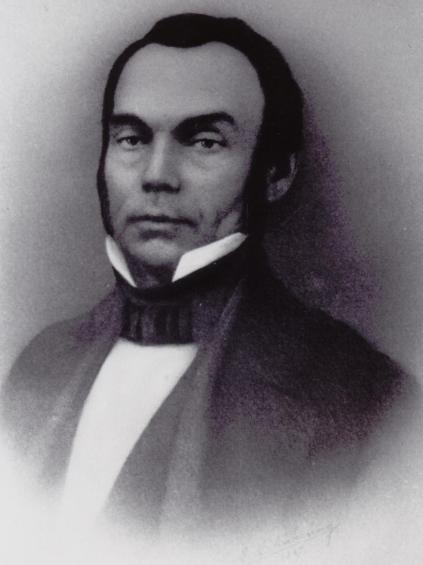
Horace Eaton
U.S.A.
Social Media

Personal Background
Horace Eaton, born in 1804 in Barnard, Vermont, established a robust educational foundation, graduating from Middlebury College in 1825 and later from Castleton Medical College in 1828. He spent several years in the public sector, serving in the Vermont Senate and as the state's lieutenant governor and governor. Eaton also held the pioneering role of the first Superintendent of Public Instruction in Vermont, where he significantly influenced the state's educational framework. Transitioning to academia, he became a professor of chemistry and natural history at Middlebury, a position he maintained until his death in 1855.
Political Ideas
Horace Eaton's political identity is marked by an unexpected convergence of progressive and conservative elements. His opposition to the admission of slave states and the Mexican War reveals a principled stance against expansionist policies. Eaton's role as the first Superintendent of Public Instruction in Vermont highlights his commitment to education reform, yet his broader ideological agility is evident in his nuanced approach to regional interests. His tenure as a professor at Middlebury further underscores his dedication to intellectual pursuits. Eaton's political journey is a tapestry of calculated moves that challenge conventional categorizations.