Jim Ross Lightfoot
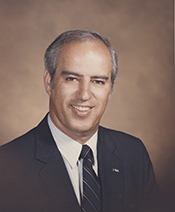
Jim Ross Lightfoot
U.S.A.

Social Media

Personal Background
Jim Ross Lightfoot graduated from high school and served in the military and reserves during the 1960s. He held various roles, including a customer engineer for IBM, a police officer, a broadcaster, and a rodeo announcer. Lightfoot transitioned into public service, spending several years in the U.S. House of Representatives, where he chaired a subcommittee of the House Committee on Appropriations. He later moved into the private sector, holding senior policy advisory roles and founding his own consulting firm.
Political Ideas
Jim Ross Lightfoot's political identity is marked by a blend of fiscal conservatism with an unexpected emphasis on deregulation, particularly in the aviation sector. His strategic philosophy appears to balance a commitment to free-market principles with a pragmatic approach to economic regulation, as seen in his support for reducing government oversight to spur growth. Lightfoot's rhetorical style tends to frame economic issues through a lens of regional industrial interests, creating an intriguing dynamic between his conservative roots and sector-specific advocacy. This juxtaposition invites deeper inquiry into how he reconciles these seemingly disparate elements.