John Rutledge
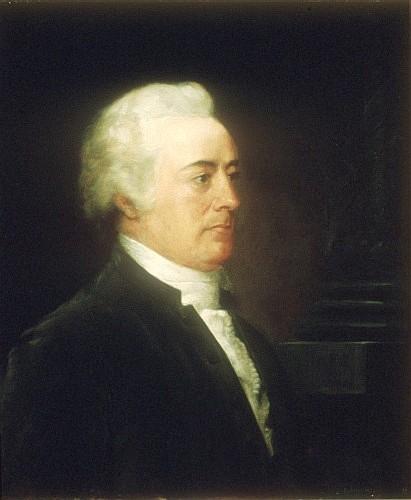
John Rutledge
U.S.A.

Social Media

Personal Background
John Rutledge was born into a prominent family in Charleston, South Carolina, and received a classical education before studying law in London. He began his career in the South Carolina Commons House of Assembly, where he became a leader and opposed the Stamp Act. Rutledge chaired a committee that petitioned against the Stamp Act and later represented South Carolina in the First Continental Congress. He played a crucial role in organizing defenses against British forces during the Revolutionary War, including the construction of Fort Sullivan. Rutledge served as the president and governor of South Carolina, where he worked to strengthen defenses against British threats. He participated in the Constitutional Convention, where he advocated for a single executive power and argued for the Senate's authority over appropriation bills. Rutledge opposed limiting voting rights to landowners and defended slavery, believing it was essential for Southern states to ratify the Constitution.
Political Ideas
John Rutledge's political identity is marked by a unique blend of strong advocacy for executive power and opposition to restrictive voting rights, while simultaneously defending slavery. His strategic philosophy reveals a calculated approach to regional interests, as seen in his support for South Carolina's neutrality during British threats. Rutledge's ideological positioning is further complicated by his defense of slavery, arguing it was essential for the Constitution's acceptance by Southern states. His rhetorical style is marked by a clear, authoritative stance on governance, advocating for concentrated executive power and Senate authority in appropriations.