Joseph Kent
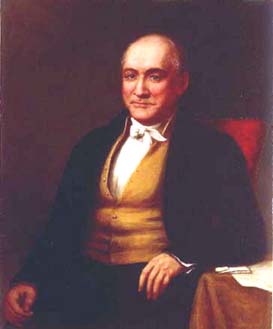
Joseph Kent
U.S.A.

Social Media

Personal Background
Joseph Kent studied medicine and practiced briefly before transitioning to farming and military service. He owned a plantation and held various ranks within the Maryland Militia. Kent also served as a director for the Chesapeake and Ohio Canal. His political career included terms in the United States Congress and the governorship of Maryland, where he focused on internal improvements, prison reform, and education. He later served in the United States Senate, where he opposed the Bank of the United States and advocated for lower tobacco prices and restrictions on tobacco imports.
Political Ideas
Joseph Kent's political career reveals a unique blend of ideological adaptability and regional advocacy. Initially a Federalist, he later embraced Democratic-Republican principles, and eventually aligned with the Republican (Whig) party. His legislative efforts, particularly in internal improvements and education, were driven by a keen focus on Maryland's economic and infrastructural development. Kent's opposition to the Bank of the United States and his push for lower tobacco prices and restrictions on imports illustrate a calculated approach to balancing national economic policies with local interests. His tenure as Governor of Maryland saw significant reforms in prison systems and state records, showcasing a commitment to progressive governance.