Madison S. Perry
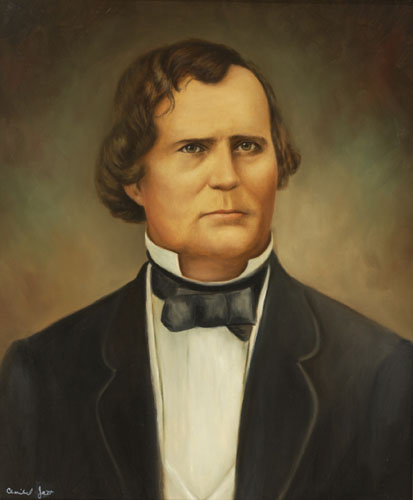
Madison S. Perry
U.S.A.

Social Media

Personal Background
Madison S. Perry established a leadership role early in life, rising to prominence among local plantation owners in Florida during the 1830s. He gained political experience through his election to the Florida House of Representatives and subsequently the Florida Senate in the 1840s and 1850s. As governor, Perry focused on infrastructure development, notably advocating for railway construction, and played a pivotal role in the state's secession from the Union. His tenure was marked by efforts to bolster the state's militia and support for the Confederacy during the Civil War.
Political Ideas
Madison S. Perry's political identity is marked by a steadfast commitment to regional economic development and a calculated approach to secession, which reveals an unexpected convergence of interests. Perry's advocacy for railway construction underscores a highly localized economic strategy, while his strong support for secession to protect slavery presents an ideological rigidity that contrasts with his economic pragmatism. His actions during the Civil War, including sending militia troops to seize federal arsenals, highlight a disruption-oriented strategy that prioritizes immediate regional gains over long-term stability.