Monrad Wallgren
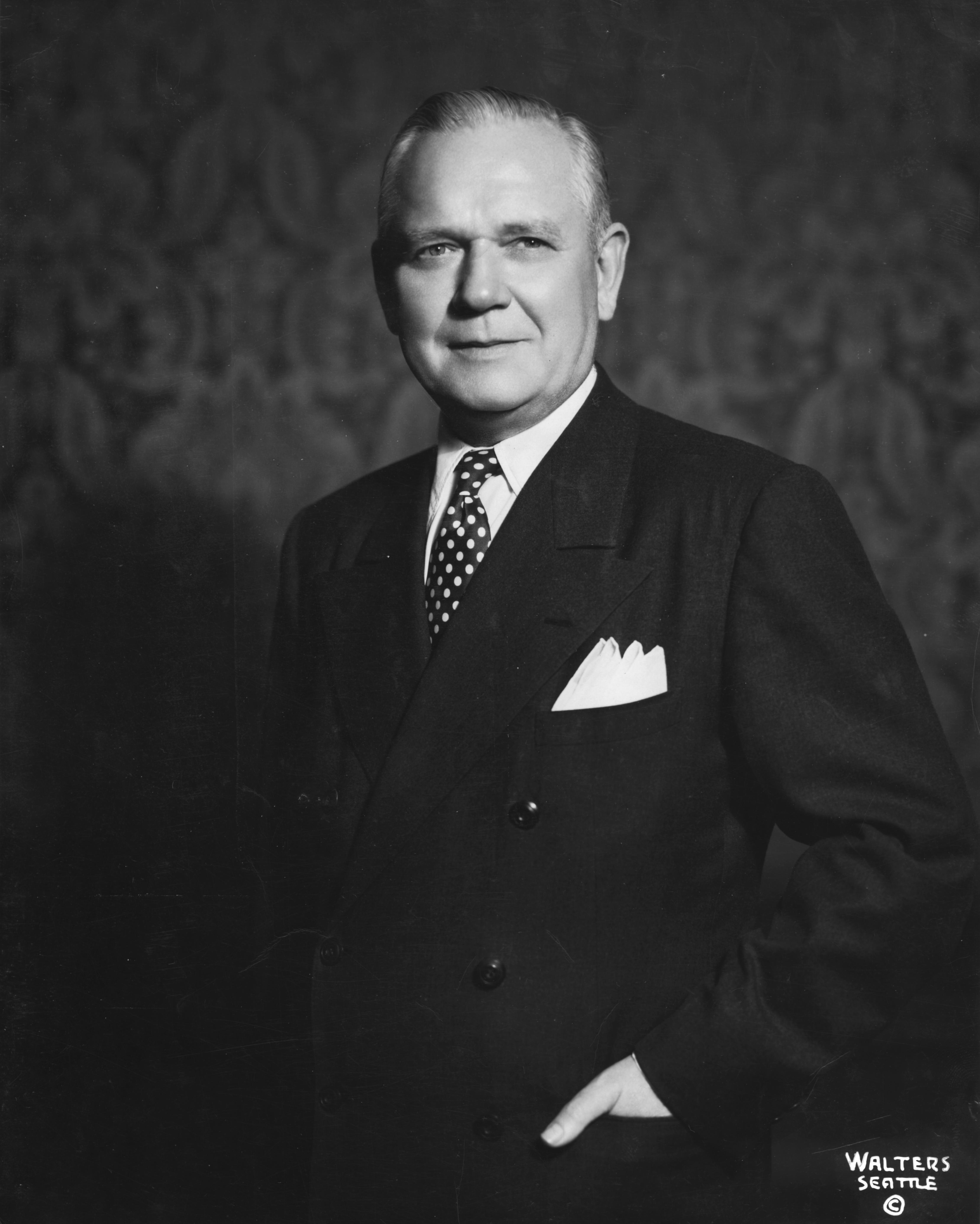
Monrad Wallgren
U.S.A.

Social Media

Personal Background
Monrad Wallgren was born in 1891 in Des Moines, Iowa, and later moved to Everett, Washington. He graduated from the Washington State School of Optometry in 1914 and pursued a career in retail jewelry and optometry until 1932. Wallgren served in the Washington National Guard during two periods, which likely influenced his later leadership roles. He transitioned into public service, spending eight years in the United States House of Representatives and four in the Senate. Wallgren then served as the governor of Washington from 1945 to 1949, followed by a stint as chairman of the Federal Power Commission.
Political Ideas
Monrad Wallgren's political identity is marked by an intriguing blend of progressive advocacy and pragmatic conservatism. He consistently advocated for small business support and infrastructure development, yet his environmental policies leaned towards sustainable practices and conservation, suggesting a nuanced approach to economic and ecological balance. Wallgren's commitment to civil rights and social justice reveals a progressive stance, while his emphasis on national security and strong defense policies indicates a more conservative undercurrent. This juxtaposition of positions prompts deeper inquiry into how Wallgren reconciles these seemingly disparate ideologies in his policymaking.