Newton Cannon
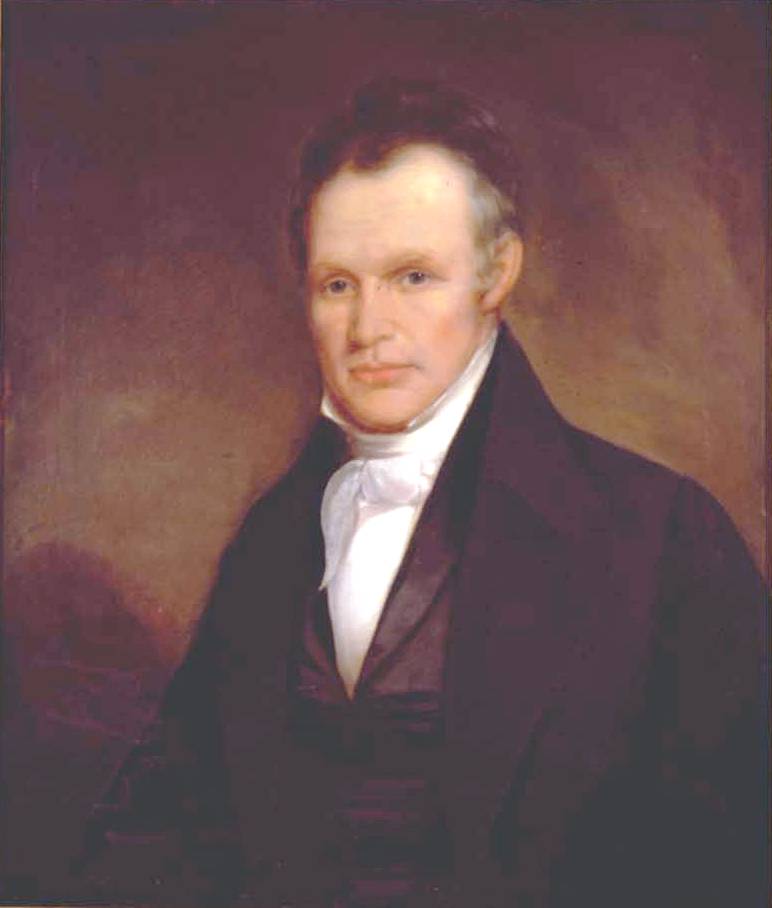
Newton Cannon
U.S.A.

Social Media

Personal Background
Newton Cannon was born in 1781 in North Carolina and relocated to Tennessee around 1790. He pursued a common school education and engaged in various occupations, including saddler, merchant, surveyor, law student, and planter. Cannon's early political involvement included serving in the State Senate and the U.S. House of Representatives, where he negotiated a treaty with the Chickasaw. He transitioned to the governorship of Tennessee, where he advocated for state bank creation, internal improvements, and public education funding. Cannon's political career was marked by his opposition to Andrew Jackson, stemming from personal and political disagreements.
Political Ideas
Newton Cannon's political identity is marked by a blend of traditionalism and calculated pragmatism, particularly in his approach to governance and economic policy. He advocated for a state bank and expanded internal improvements, yet his ideological agility is evident in his support for public education funding. His long-standing opposition to Andrew Jackson reveals a deeply personal and principled stance, despite their shared Whig affiliations. Cannon's strategic interpretation of the 1834 constitution to extend his gubernatorial tenure showcases a highly localized approach to constitutional law, revealing a nuanced understanding of regional political dynamics.