Noah Noble
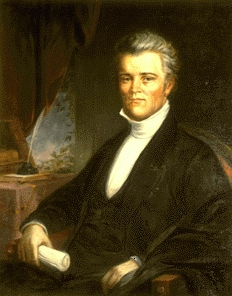
Noah Noble
U.S.A.

Social Media

Personal Background
Noah Noble was born in 1794 in Berryville, Virginia, and relocated multiple times during his early years, settling in Indiana by 1811. He entered politics in 1820, achieving notable success in local elections and military commissions. Noble's political career included serving in the Indiana House of Representatives and being elected governor of Indiana in 1831, a position he held for two terms. During his governorship, he focused on internal improvements, notably advocating for the Wabash and Erie Canal and signing the Mammoth Internal Improvement Act into law. After leaving office, Noble continued to influence public policy as a member of the Board of Internal Improvements.
Political Ideas
Noah Noble's political career is marked by a distinctive blend of regional economic development and fiscal conservatism. He champions internal improvements like the Wabash and Erie Canal while opposing railroads, revealing a preference for state-led infrastructure over private monopolies. His support for the Mammoth Internal Improvement Act, paired with a proposed ad valorem tax increase, illustrates a calculated approach to state funding and economic growth. Noble’s ideological agility is evident in his simultaneous advocacy for public education reforms and his resistance to federal banking, showcasing a nuanced stance on state versus federal power.