Pierce Mason Butler
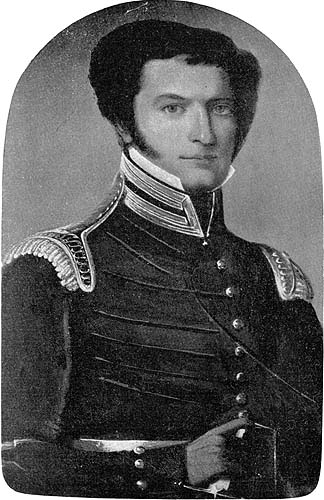
Pierce Mason Butler
U.S.A.

Social Media

Personal Background
Pierce Mason Butler began his career in the United States Army, rising to the rank of captain before resigning in 1829. He then transitioned to a role as an agent to the Cherokee at Fort Gibson, which he held until 1846. Butler also served as the 56th governor of South Carolina from 1836 to 1838, showcasing his leadership in governance. His military career culminated in his service as a colonel of the Palmetto Regiment during the Mexican–American War, where he was killed in action at the Battle of Churubusco. Educated at the Willington Academy in South Carolina, Butler's foundational background reflects a blend of military, administrative, and political experience.
Political Ideas
Pierce Mason Butler's political career reveals a blend of military pragmatism and regional advocacy, with an unexpected alignment on certain policies with traditionally opposing factions. His military service, rising to the rank of captain, suggests a disciplined approach to governance, yet his legislative actions as governor of South Carolina hint at a more localized, interest-driven strategy. Butler's tenure as an agent to the Cherokee at Fort Gibson until 1846 showcases a nuanced stance on indigenous affairs, revealing a complex interplay between federal directives and regional considerations. His tragic death in the Mexican–American War underscores a life of dedication to both military and political service, raising questions about how his personal experiences shaped his policy perspectives.