Samuel Sprigg
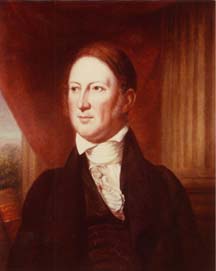
Samuel Sprigg
U.S.A.

Social Media

Personal Background
Samuel Sprigg, born around 1783 in Maryland, inherited his uncle's estate after his father's death. He married Violetta Lansdale in 1811 and had two children. Sprigg spent over two decades in public service, notably as Governor of Maryland, where he focused on infrastructure projects and faced partisan conflict over state constitutional reforms. He played a pivotal role in the transition of the Potomac Company's charter to the Chesapeake and Ohio Canal Company, serving on its Board of Directors. Sprigg retired from politics in 1822.
Political Ideas
Samuel Sprigg's political career reveals an intriguing blend of regional economic pragmatism with a principled stand on state governance reforms. His advocacy for infrastructure projects, like the Chesapeake and Ohio Canal, shows a calculated approach to fostering economic growth, yet his failed attempts at state constitutional reforms suggest a persistent, if not always successful, commitment to reshaping political processes. Sprigg's ability to navigate and sometimes defy partisan divides hints at a strategic, ideologically agile politician.