Stanley C. Wilson
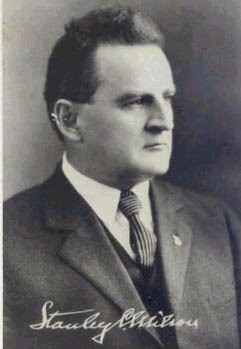
Stanley C. Wilson
U.S.A.

Social Media

Personal Background
Stanley C. Wilson graduated from Goddard Seminary and Tufts University before studying law and being admitted to the bar in 1904. He held various roles in state government, including State's Attorney, State Representative, and Lieutenant Governor, before serving as Governor of Vermont, where he focused on flood recovery and Great Depression relief. Wilson also operated a dairy farm and held positions in several companies, including the National Bank of Orange County. He was a civic leader, founding the Chelsea Health Center and serving on multiple boards, and received numerous honors, including an LL.D. from Tufts University.
Political Ideas
Stanley C. Wilson's political identity is marked by an ideological agility that blends traditional Republican fiscal conservatism with progressive social initiatives. His tenure as governor saw him challenge party norms by serving two consecutive terms, arguing for continuity amid economic turmoil. Wilson's economic policies, such as advocating for and implementing a state income tax to stabilize revenue, reveal a calculated approach to fiscal management. His civic activism, including founding the nation's first community-owned nonprofit health center, underscores a commitment to social welfare that contrasts with his conservative economic stances. This juxtaposition of policy positions invites deeper inquiry into how Wilson reconciles these seemingly divergent priorities.