Thomas H. Benton
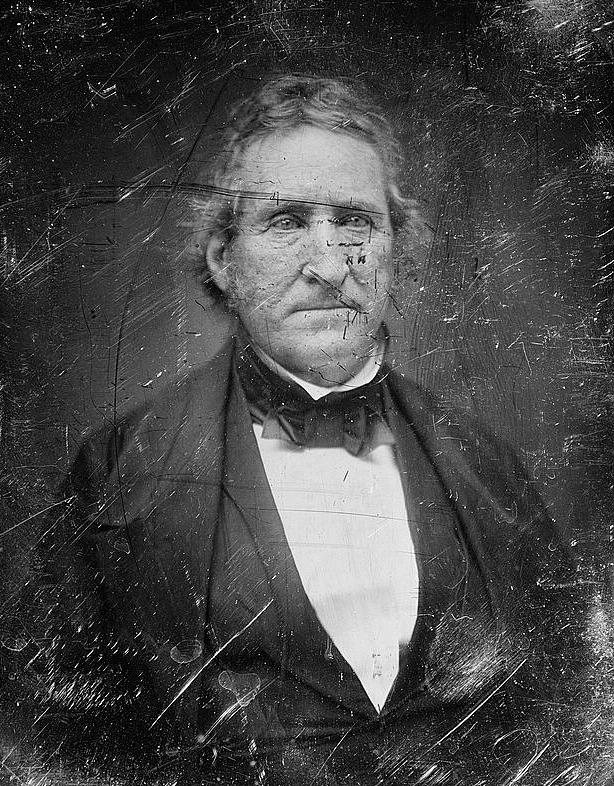
Thomas H. Benton
U.S.A.

Social Media

Personal Background
Thomas H. Benton was born in North Carolina in 1782 and later moved to Tennessee, where he was admitted to the bar in 1805. He served in various roles, including as a state senator and aide-de-camp to General Andrew Jackson during the War of 1812. Benton settled in Missouri, where he was elected as one of the state's inaugural U.S. Senators in 1821. He championed economic policies favoring hard currency, opposed land speculation, and advocated for westward expansion and the annexation of Texas. Despite initially owning slaves, Benton later opposed the institution, which affected his political standing.
Political Ideas
Thomas H. Benton's political identity is marked by a complex blend of economic conservatism and expansionist nationalism. His advocacy for "hard money" and opposition to land speculation juxtaposes with his fervent support for westward expansion, reflecting a calculated approach to economic stability while promoting territorial growth. Benton's ideological shift from supporting to opposing slavery after the Mexican-American War reveals a nuanced stance on human rights, further complicated by his support for Native American displacement. This combination of economic rigidity and expansionist zeal, coupled with his abrupt anti-slavery stance, presents a politician whose policy positions are as unpredictable as they are influential.