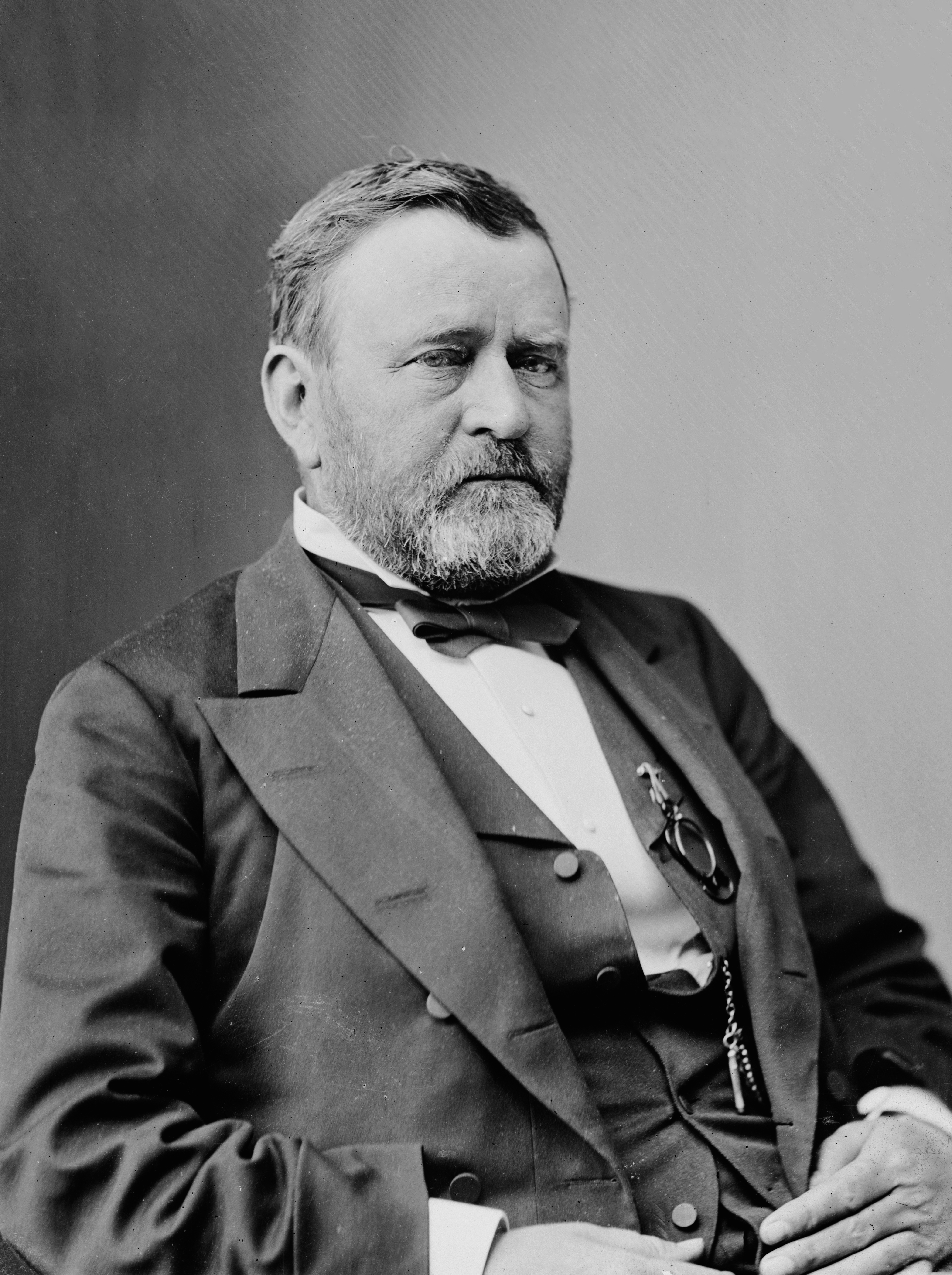
U.S.A.
Ulysses S. Grant's foundational background is marked by a diverse educational foundation and a robust professional career. He attended various schools, including Maysville Seminary and John Rankin's academy, which provided him with a solid academic base. His early civilian life was characterized by financial struggles, which eventually led him to work in the family leather business. Grant's military career saw significant achievements, particularly during the Civil War, culminating in his promotion to General of the Army of the United States. His leadership skills were further demonstrated during his presidency, where he enforced Reconstruction and managed various national crises. Post-presidency, Grant continued to engage in public life, touring the country and eventually settling in New York.
Ulysses S. Grant's political identity is marked by an intriguing blend of progressive social policies and conservative fiscal measures. His advocacy for paying Civil War bonds in gold contrasts sharply with his support for women's rights and suffrage, revealing a calculated approach to economic stability while embracing social reforms. Grant's legislative record on civil rights, including appointing numerous Jewish individuals to federal positions and opposing sectarian schools, suggests a nuanced stance on religious freedom. His efforts to limit religious indoctrination in public schools further underscore a commitment to secularism in education. Grant's enforcement of Reconstruction and prosecution of polygamists and pornographers highlight a strong law-and-order philosophy, yet his environmental legacy with the establishment of Yellowstone National Park indicates a surprising progressive streak in conservation policy.
