Usher L. Burdick
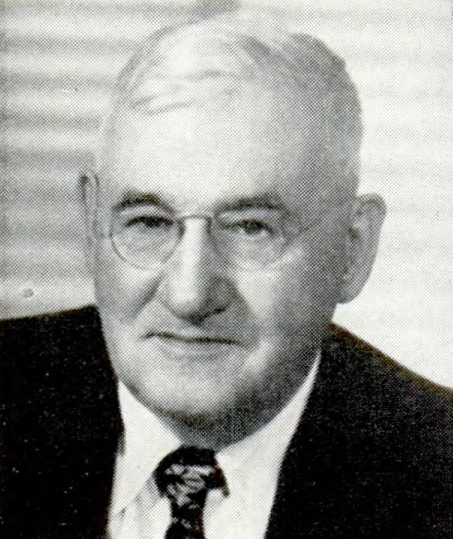
Usher L. Burdick
U.S.A.

Social Media

Personal Background
Usher L. Burdick was born in 1879 in Owatonna, Minnesota, and later moved to Dakota Territory with his family. He completed his education with a law degree from the University of Minnesota Law School, and began his career in public service as a deputy superintendent of schools. Burdick held various positions in state government, including serving as speaker of the North Dakota House of Representatives and as the state's attorney of Williams County. He transitioned to federal roles, serving as a member of the United States House of Representatives and as an assistant United States district attorney. Burdick's professional expertise encompassed both public sector leadership and legal practice, with a focus on advocating for farmers' rights and civil rights.
Political Ideas
Usher L. Burdick's political identity is marked by an intriguing blend of progressive economic policies and conservative social stances. His support for New Deal programs and opposition to farm foreclosures reveals a commitment to economic justice, yet his stance against the Communist Control Act suggests a cautious approach to civil liberties. Burdick's legislative support for the Civil Rights Act of 1957, paired with his advocacy for Native American issues, demonstrates a nuanced engagement with social justice that defies simple categorization. His rhetorical style likely balances a pragmatic appeal to regional economic concerns with a principled stand on civil rights, creating a complex political persona that invites deeper examination.