W. Kerr Scott
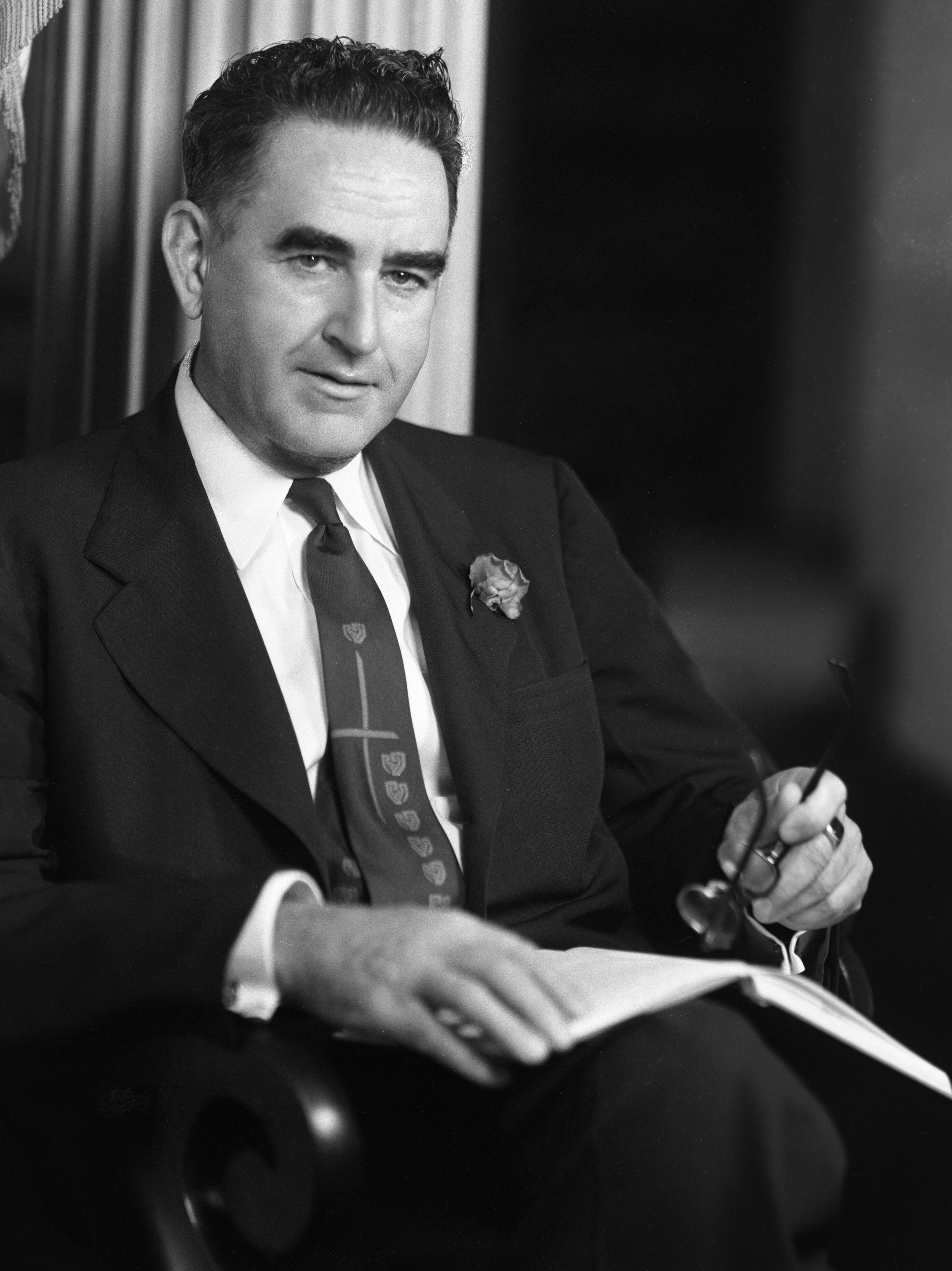
W. Kerr Scott
U.S.A.

Social Media

Personal Background
W. Kerr Scott graduated from North Carolina College of Agriculture and Mechanic Arts with a Bachelor of Science in agriculture, establishing a foundation in agricultural expertise. He transitioned from agricultural work to public service, briefly serving in the U.S. Army during World War I. Post-war, Scott engaged in farming, which informed his later policy advocacy for agricultural issues. Elected Governor of North Carolina, Scott implemented significant infrastructure improvements, including a $200 million rural road building program. His tenure also saw progressive appointments in education, such as nominating Frank Porter Graham to the U.S. Senate and appointing the first black member to the North Carolina Board of Education.
Political Ideas
W. Kerr Scott's political career reveals a complex interplay between progressive infrastructure investments and staunch segregationist principles. His commitment to agricultural development through the "Go Forward" program contrasts sharply with his conservative stance on civil rights, including his opposition to desegregation efforts and the Civil Rights Act of 1957. Scott's ideological agility in balancing these seemingly disparate policy areas suggests a calculated approach to regional interests, particularly in maintaining the status quo in the South.