William Cannon
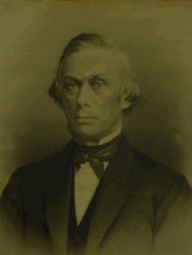
William Cannon
U.S.A.
Social Media

Personal Background
William Cannon was born in Bridgeville, Delaware, and established himself in various business ventures, including lumber, grain, and banking. He served multiple terms in the Delaware General Assembly and held the position of state treasurer. Cannon transitioned from the Democratic Party to the Republican Party and was elected Governor of Delaware, where he declared the end of slavery in the state. His professional experience and leadership roles were marked by a commitment to the Union and emancipation.
Political Ideas
William Cannon's political identity is marked by a calculated blend of progressive abolitionism and strategic statecraft. His support for the Emancipation Proclamation and declaration that "slavery in this state is doomed" show a principled stance against slavery, yet his request for federal troops to oversee elections reveals a pragmatic approach to maintaining political control. Despite his anti-slavery rhetoric, the rejection of the Thirteenth Amendment by the General Assembly during his tenure highlights a complex interplay between moral conviction and political maneuvering. Cannon's life and career, from his business ventures to his legislative actions, suggest a deeply strategic thinker who navigated the turbulent waters of his era with a blend of ideological commitment and political acumen.