William Everett
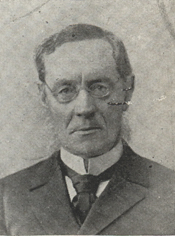
William Everett
U.S.A.

Social Media

Personal Background
William Everett, born in 1839 in Watertown, Massachusetts, established a robust educational foundation, graduating from Harvard University and its law department, and later from Trinity College, Cambridge. He began his career in academia, tutoring and teaching at Harvard University before becoming the master of Adams Academy. Everett's professional journey included a brief foray into politics, where he was elected to the United States Congress, although he did not secure the governorship of Massachusetts. His background in education and law, combined with his academic leadership roles, underscores a career dedicated to intellectual and institutional growth.
Political Ideas
William Everett's political identity is shaped by an unusual blend of academic rigor and religious engagement, which he channels into his legislative priorities. His legislative record reveals a calculated approach to education funding, suggesting a deeply rooted belief in intellectual advancement as a cornerstone of societal progress. Everett's ideological positioning is further complicated by his advocacy for policies that appear to balance secular and religious interests, hinting at a nuanced understanding of the role of faith in public policy. His rhetorical style likely interweaves moral and intellectual arguments, compelling listeners to consider the broader implications of his policy proposals.