C. Farris Bryant
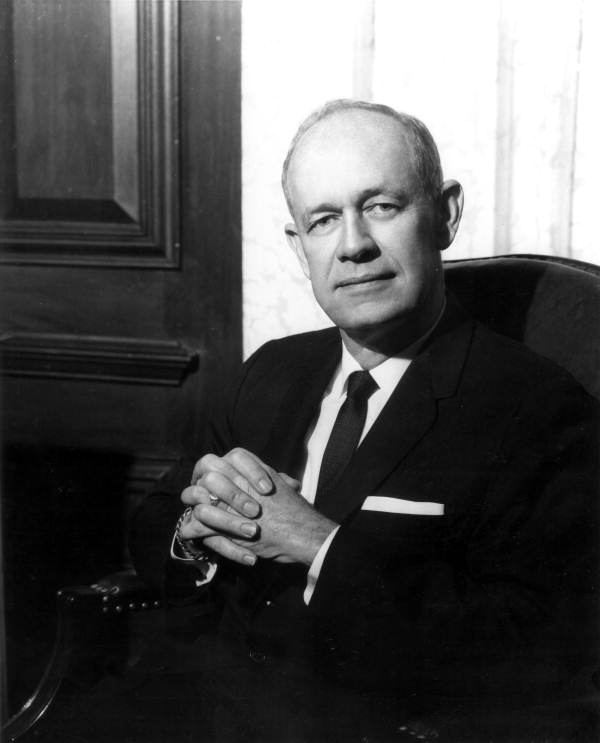
C. Farris Bryant
U.S.A.

Social Media

Personal Background
C. Farris Bryant was born in Ocala, Florida, and earned a business degree from the University of Florida before obtaining a law degree from Harvard University. He began his career as an auditor for the Florida comptroller and later served in the U.S. Navy during World War II. Bryant entered politics by winning a seat in the Florida House of Representatives, eventually becoming its Speaker. He transitioned to the public sector, advocating for infrastructure projects and education reforms as Governor of Florida. Bryant's leadership extended to national roles, including director of the Office of Emergency Planning and chair of the U.S. Advisory Commission on Intergovernmental Relations.
Political Ideas
C. Farris Bryant's political identity is marked by an intriguing blend of fiscal conservatism with progressive infrastructure investments, revealing a strategic approach to regional economic development. His ideological stance on civil rights evolved from initial opposition to eventual cooperation with civil rights leaders, showcasing a calculated shift that balanced regional readiness with national civil rights momentum. Bryant's support for Cold War-era civil defense and education policies underscores a firm anti-Communist stance, yet his later acceptance of racial integration hints at a nuanced understanding of social progress. His rhetorical style likely navigated these complex policy landscapes with a focus on long-term state development, balancing traditional values with evolving societal norms.