Powers Hapgood
Powers Hapgood
U.S.A.
Social Media

Personal Background
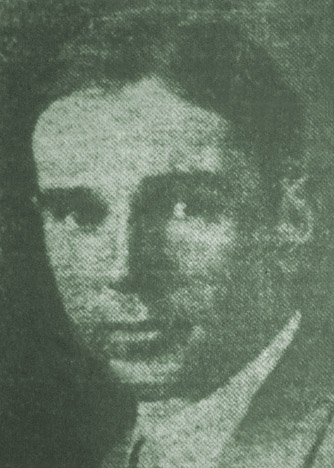
Powers Hapgood graduated from Phillips Academy and Harvard University, establishing a strong educational foundation. He gained firsthand experience of working-class life through various jobs before becoming an organizer for the United Mine Workers of America. Hapgood played a pivotal role in organizing non-union coal mines and spent time abroad studying mining practices. He was deeply involved in labor union activities, including stints with the Socialist Party of America and the Committee for Industrial Organization, and faced legal challenges related to his union work.
Political Ideas
Powers Hapgood's political identity is marked by a steadfast commitment to labor unions and social justice, underpinned by his socialist ideology. He uniquely combines a deep-rooted advocacy for workers' rights with a principled stance on social causes, as seen in his involvement with the Sacco-Vanzetti Defense Committee. Hapgood's approach reveals a tension between his ideological rigidity and practical engagement with diverse labor movements, raising questions about how he reconciles these seemingly disparate elements. His rhetorical style likely emphasizes solidarity and collective action, inviting deeper inquiry into his strategic philosophy.