Robert Armstrong
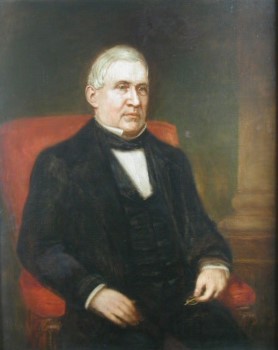
Robert Armstrong
U.S.A.

Social Media

Personal Background
Robert Armstrong's foundational background includes a military career spanning the War of 1812 and the Creek War, during which he was wounded and served on Andrew Jackson's staff. He later held a civil service role as the Postmaster of Nashville, Tennessee, and commanded a brigade during the Second Seminole War. Armstrong transitioned to diplomatic service as a United States consul in Liverpool and later engaged in business ownership in Washington, D.C. His personal life included a marriage in 1814, and he passed away in 1854.
Political Ideas
Robert Armstrong's political career reveals a blend of military experience and local governance, suggesting a unique approach to leadership shaped by both battlefield and administrative challenges. His military background, particularly under Andrew Jackson, hints at a strategic, perhaps even tactical, mindset in political maneuvering. Armstrong's tenure as a postmaster and later as a consul indicates a knack for navigating complex, international environments, yet his unsuccessful gubernatorial bid points to a possible disconnect between his military pragmatism and electoral appeal. His later ownership of a newspaper in Washington, D.C., underscores a commitment to influencing public opinion, but the lack of specific policy stances in the data leaves his ideological leanings intriguingly ambiguous. Armstrong's career trajectory suggests a politician who might prioritize calculated, perhaps unconventional, strategies over traditional ideological purity.