Thomas Todd
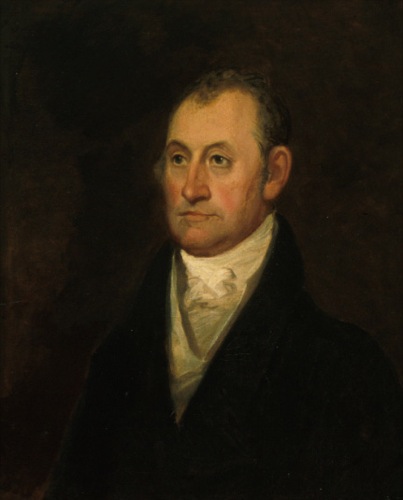
Thomas Todd
U.S.A.

Social Media

Personal Background
Thomas Todd was born in 1765 in Virginia and served in the Continental Army during the American Revolutionary War. He graduated from Liberty Hall Academy and was admitted to the Kentucky bar in 1786. Todd held judicial positions in Kentucky, including serving as a judge of the Kentucky Court of Appeals and later as its chief judge. He was nominated by President Thomas Jefferson as an Associate Justice of the Supreme Court in 1807, where he notably influenced procedural rulings in early American jurisprudence. Todd's professional career was marked by his involvement in significant land claim cases and his adherence to judicial interpretation principles.
Political Ideas
Thomas Todd's judicial career reveals an intriguing ideological flexibility, particularly in his adoption of Chief Justice John Marshall's judicial interpretation despite his Jeffersonian roots. His rulings on land claims in the early American frontier highlight a calculated approach to regional interests, balancing state sovereignty with federal authority. Todd's procedural ruling in *Riggs v. Taylor* underscores a meticulous attention to legal documentation, suggesting a conservative yet detail-oriented judicial philosophy. This combination of ideological pragmatism and procedural rigor presents an unexpected tension that invites deeper inquiry into his judicial reasoning.